.png)
What to Expect During Your Ketamine Therapy
If you are considering ketamine therapy for depression, it is natural to feel a mix of hope and nervousness. Understanding the process can help you feel grounded and prepared for your first session.
Here is a step-by-step guide to the experience.
1. The Preparation
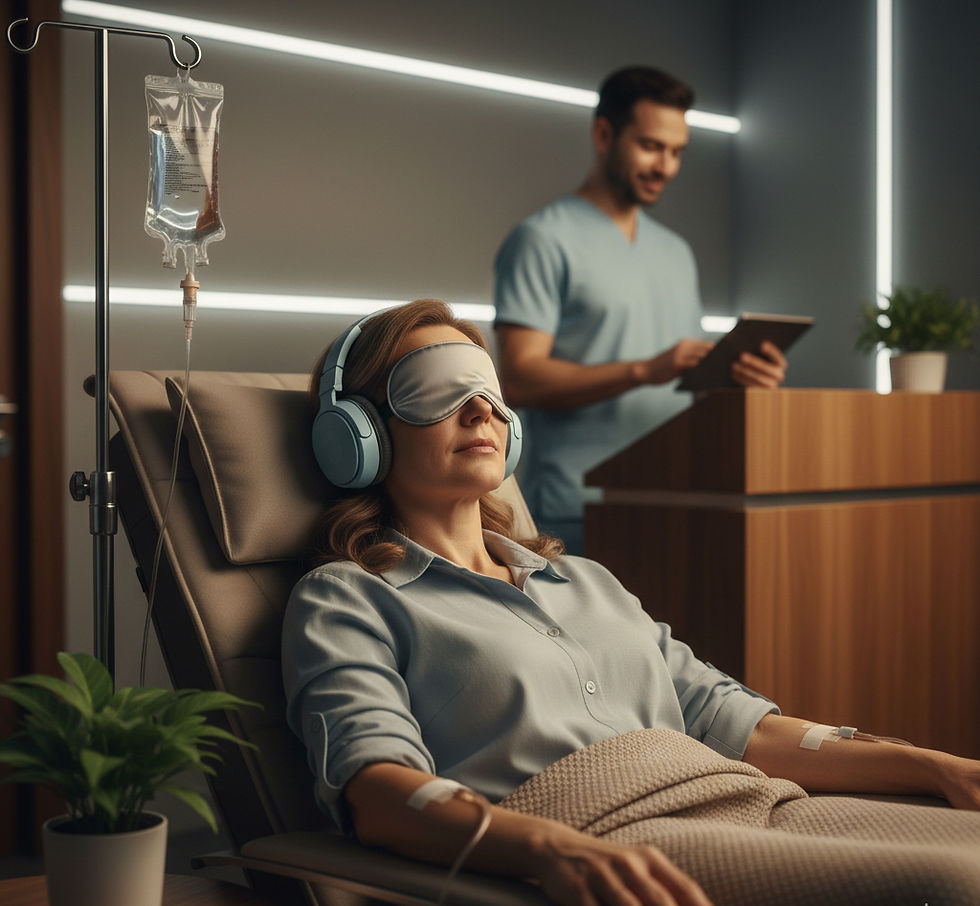
Before your session begins, you’ll typically be settled into a comfortable reclining chair in a quiet, dimly lit room.
The Vibe: Most clinics provide noise-canceling headphones with calming music and an eye mask to help you focus inward.
Vitals: A healthcare professional will check your blood pressure and heart rate and stay nearby to monitor you throughout the process.
2. The "Infusion" Experience
Whether you are receiving an IV infusion or the nasal spray (Esketamine), the onset is usually gentle. Within 5 to 10 minutes, you will begin to feel the effects.
Dissociation: You may feel a sense of "detachment" from your body or your surroundings. This is normal and often described as a floating sensation.
Shift in Perception: Colors or sounds might seem different, and your sense of time may slow down.
Emotional Release: Some people experience vivid imagery or a deep sense of introspection.
3. Safety and Support
The active phase usually lasts 40 to 60 minutes. You are never "trapped" in the experience; the dosage is clinical and low, meaning you remain conscious and able to speak if you need to alert the medical staff to any discomfort.
4. The Recovery (The "Afterglow")
Once the treatment ends, the dissociative effects wear off quickly, usually within 20–30 minutes.
Observation: You will stay at the clinic for about an hour to ensure you are fully alert.
The Ride Home: You cannot drive yourself home after a session. You’ll need a friend, family member, or a car service.
Next-Day Effects: Most patients feel a sense of "lightness" or mental clarity the following day. This is often referred to as the "afterglow" effect.
Pro Tip: The days following a session are the best time for Integration Therapy. Since your brain is more "plastic" (open to change), talking to a therapist can help lock in the positive shifts in your mood.


Comments